




 UA
 PL
How to Dance in Heels: Tips for Your First Heels Class

Your first heels dance class can feel very different from dancing in flat shoes. The heel changes your posture, step length and movement mechanics, so even simple choreography may initially require more concentration.
The good news is that you do not need advanced dance experience to start. For dancing in heels for beginners, the priority is control: learning how to stand, walk and move confidently before adding faster choreography.
Here is what to expect and how to prepare for your first class.
What Is Heels Dance?
Heels dance is a style of choreography performed in high-heeled shoes. Depending on the class, it may combine elements of commercial dance, jazz, floorwork, sensual choreography and performance technique.
Classes often focus on:
- posture;
- walking technique;
- turns;
- hip movement;
- body waves;
- floor transitions;
- musicality;
- confidence and performance.
The exact style differs between instructors, but good technique always starts with clear, controlled movement.
Can Beginners Learn How to Dance in Heels?
Yes.
You do not need to be able to walk perfectly in high heels before joining a beginner class. In fact, beginner lessons are designed to teach the basic mechanics.
At first, you may spend more time practising:
- standing correctly;
- walking slowly;
- changing direction;
- stopping with control;
- coordinating the upper and lower body.
These fundamentals may look simple, but they make later choreography much easier to learn.
Choose the Right Heels
For your first class, stability and fit matter more than dramatic height.
Look for shoes that:
- fit securely;
- hold the ankle well;
- do not allow the foot to slide forward;
- feel comfortable when standing;
- allow you to bend the knees easily.
If you are new to high platforms, a supportive boot can feel easier to control than a very open sandal.
Avoid choosing the tallest pair simply because it looks impressive. A more manageable model gives you more freedom to focus on technique.
Learn a Strong Starting Position
Before learning choreography, get comfortable standing in your shoes.
Keep:
- the chest lifted;
- shoulders relaxed;
- core gently active;
- knees soft rather than locked.
Avoid pushing the hips too far forward or leaning backward to compensate for the heel.
This neutral position gives you a reliable base for walks, turns and body movement.
Take Smaller, More Deliberate Steps
One of the most common beginner mistakes is trying to walk in heels using the same stride as in flat shoes.
Shorter steps are usually easier to control.
Think about:
- Placing the foot deliberately.
- Keeping the knees soft.
- Completing one step before starting the next.
- Maintaining an upright torso.
- Avoiding rushed footwork.
Your walk should feel clean before you try to make it dramatic.
Keep Your Knees Soft
Locked knees can make heels choreography look stiff and make changes of level more difficult.
Slightly bent knees help you:
- absorb movement;
- work through the hips;
- lower the body smoothly;
- create softer transitions.
This becomes especially important during walks, turns and body waves.
Do Not Look Down Constantly
It is natural to watch your feet when you first wear heels.
But constantly looking down pulls the head and upper body forward and can make movement look tense.
Instead, practise looking ahead while using your peripheral vision to understand where your feet are.
Start slowly enough that you do not need to monitor every step.
Use Your Arms With Purpose
Your arms are not only decorative.
They help organise the upper body and make turns, walks and transitions look more complete.
At first, use simple, clear arm positions rather than adding complicated styling immediately.
Once the footwork becomes more natural, you can make the arms softer and more expressive.
Start Turns Slowly
Beginners benefit more from controlled rotation than from speed.
When practising a turn:
- prepare your feet first;
- know which leg supports the movement;
- keep the knees soft;
- rotate with control;
- finish in a clear position.
A slow, clean turn is more useful than a fast one that becomes difficult to stop.
What to Wear to a Heels Dance Class
Your clothing should allow full movement while staying securely in place.
Good options include:
- fitted shorts;
- bodysuits;
- supportive tops;
- leggings or fitted dance pants;
- knee pads if the class includes floorwork.
Avoid clothing that is so loose that it can catch under the heel or platform.
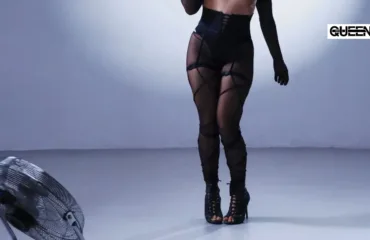
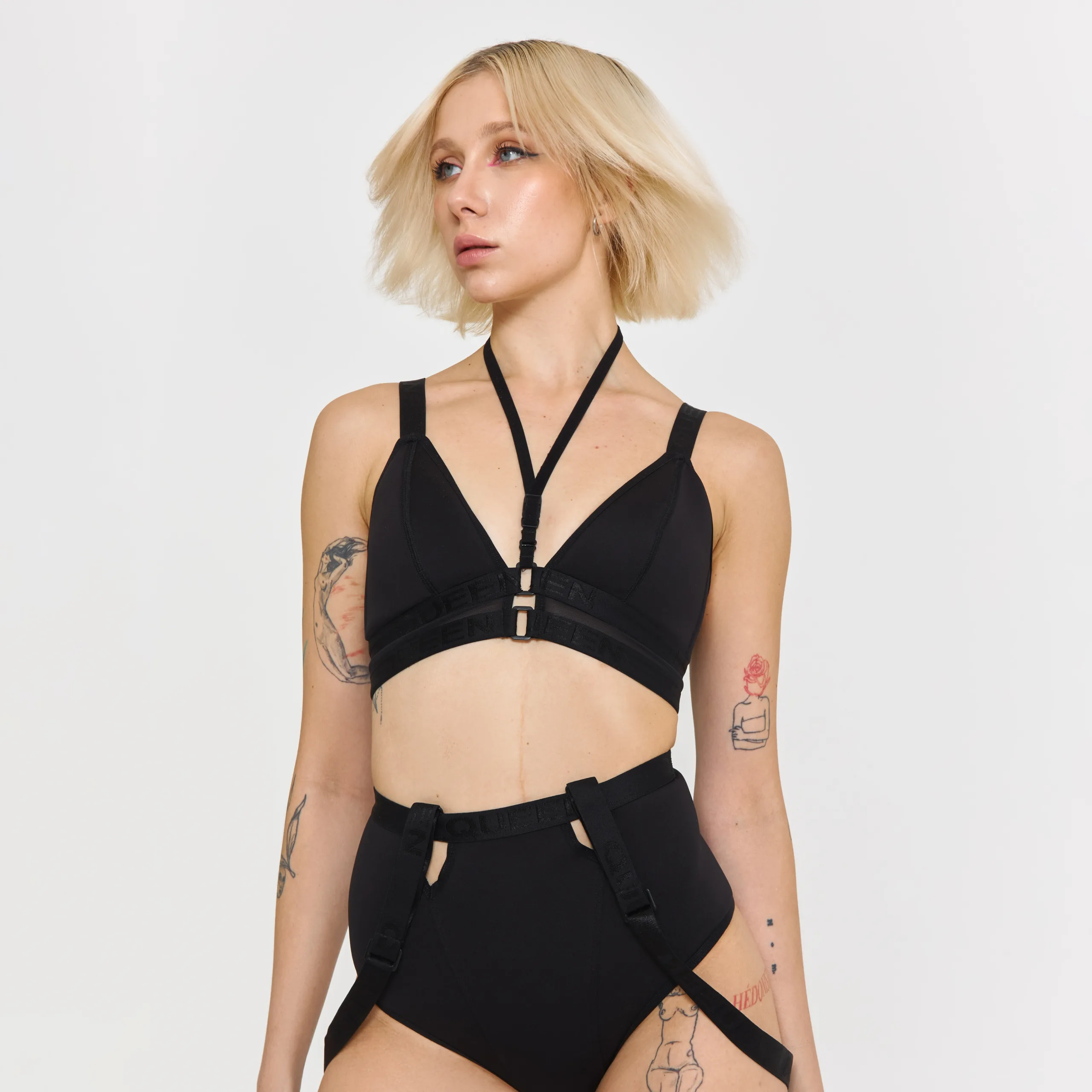
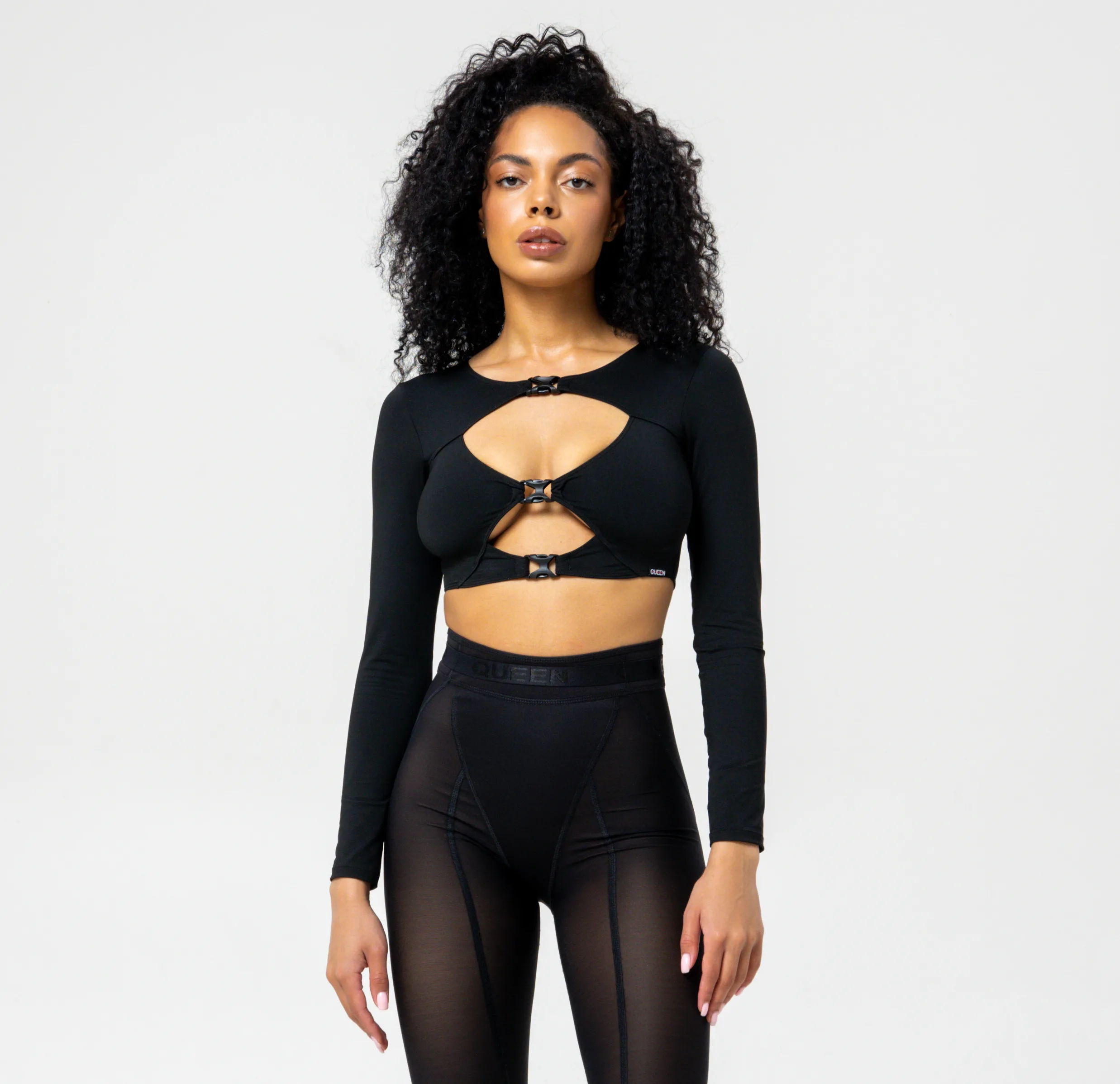
Queen Wear offers a dedicated High Heels collection for choreography, floorwork and dance training.
Knee Pads Can Be Useful
Not every beginner class includes floorwork, but if your lesson involves kneeling, slides or transitions to the floor, knee pads can make practice much more comfortable.
They are especially useful while you are still learning how to lower yourself smoothly rather than dropping heavily onto the knees.
Choose a pair that stays securely in place and still allows the leg to bend freely.
What Happens in a Beginner Heels Class?
A typical class may include:
- Warm-up and mobility.
- Posture and walking drills.
- Basic turns.
- Hip and body movement.
- A short choreography.
- Floorwork, depending on the class.
- Cool-down or stretching.
Do not worry if you cannot remember the full choreography immediately.
Your first classes are mainly about teaching the body a new movement pattern.
Common Beginner Mistakes
Wearing heels that are too high
More height increases the challenge. Start with shoes you can control comfortably.
Taking very large steps
Long strides often make choreography harder to manage. Shorter steps give you more precision.
Locking the knees
Keep them slightly soft so the movement remains fluid.
Trying to dance too fast
Learn the sequence slowly first. Speed should come after control.
Focusing only on choreography
If your basic walk, turns and posture are not comfortable yet, complicated choreography will feel much harder.
Comparing yourself with experienced dancers
Someone who has trained in heels for years will naturally move differently. Focus on improving your own technique from class to class.
How to Practise Heels Dance at Home
You do not need to repeat the full choreography every time.
Useful beginner exercises include:
- standing and walking in heels for short periods;
- controlled stops;
- simple turns;
- hip isolations;
- body waves;
- practising arm positions;
- repeating short combinations from class.
Use a clear, non-slip floor with enough space around you.
Avoid advanced drops, fast turns or unfamiliar floorwork without instruction.
Build Strength Outside Class
Heels dance requires more than choreography.
Useful supporting work includes:
- calf raises;
- ankle-strength exercises;
- glute exercises;
- core training;
- single-leg exercises;
- hip mobility;
- foot-strengthening exercises.
Stronger legs, feet and ankles make heels technique feel more natural over time.
How Often Should Beginners Train?
One or two heels classes per week can be enough to make steady progress while giving your feet, ankles and knees time to recover.
If your feet become unusually tired or your technique starts to deteriorate, stop rather than forcing more repetitions.
Quality practice is more useful than continuing when the lower body is fatigued.
Confidence Comes After Technique
Heels dance often looks effortless, but that effect comes from repetition and strong fundamentals.
First learn how to stand and walk comfortably. Then add turns, body movement, floorwork and more expressive choreography.
For beginners, clean technique is more important than extreme heel height, speed or complicated combinations.
Wear shoes you can manage, practise consistently and give your body time to adapt.
For training and choreography, explore the Queen Wear High Heels collection with fitted dancewear designed for movement, floorwork and heels classes.